
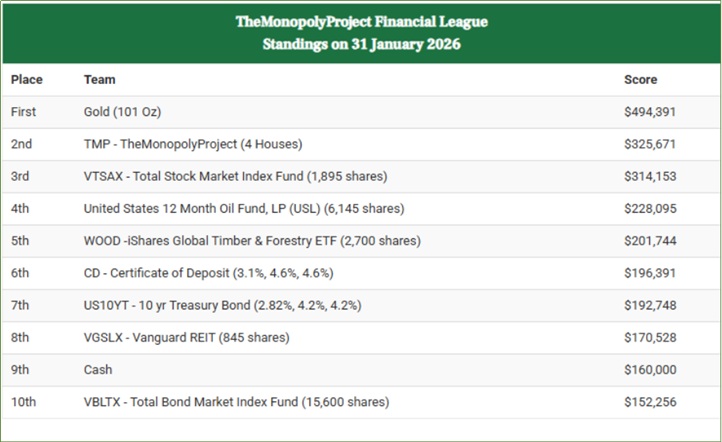
Gold is still in First Place with some crazy moves at the end of January 2026. We still expect that real estate will recover and TMP will be back in First Place, maybe later this calendar year.
What’s going on with gold? Here is a GROK analysis of GOLD for the last six months:
“Gold Price Analysis: August 2025 to February 2026
Over the past six months, from August 2025 to early February 2026, the price of gold has exhibited a robust upward trajectory, reflecting broader economic uncertainties, geopolitical tensions, and shifts in monetary policy. Starting at approximately $3,360 per ounce in early August 2025, gold prices climbed steadily, reaching around $4,300 by the end of December 2025, an increase of about 28%. This period was characterized by gradual gains, driven by persistent inflation concerns, a weakening U.S. dollar, and strong demand from central banks and retail investors seeking safe-haven assets.
By mid-October, prices briefly surged past $4,300 amid escalating global risks, including U.S. fiscal policy debates and international trade frictions, before consolidating around $4,000 in November and December. The most dramatic movements occurred in January 2026, where gold experienced a parabolic rally followed by a sharp correction, underscoring the metal’s volatility in response to rapid news cycles. Entering the month at roughly $4,325 per ounce, prices accelerated sharply, peaking at an all-time high of $5,523 on January 28—a staggering 28% monthly gain at its zenith.
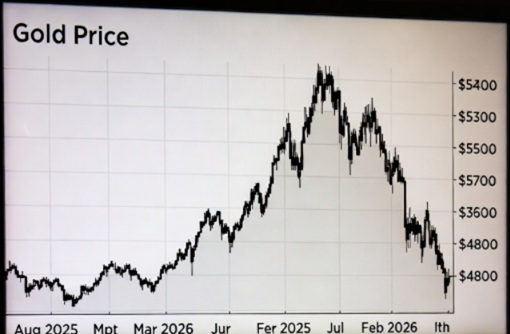
This surge, which aligned closely with the $5,300–$5,400 range highlighted in forecasts, was fueled by a confluence of factors: heightened geopolitical instability, including U.S. military actions in Venezuela and threats against Iran; erosion of trust in U.S. monetary policy amid investigations into Federal Reserve Chair Jerome Powell; and aggressive tariff policies under President Trump that rattled global markets.
Additionally, rumors of BRICS nations developing a gold-backed settlement system amplified demand, pushing prices into uncharted territory as investors fled to tangible assets amid a cratering dollar and fears of fiscal unsustainability.
However, the rally proved unsustainable, with prices reversing course in the final days of January. From the January 28 peak, gold dropped to $5,438 on January 29 and plummeted further to $4,884 on January 30, a decline of over 11% in just two days.
This pullback extended into early February, with prices dipping below $4,800 by February 1. Analysts attributed the correction to profit-taking after the historic run, thinning liquidity exacerbating volatility, and a rebound in the U.S. dollar following speculation that the White House might appoint a “hard-money” advocate to the Fed, signaling potential policy tightening.
The rapid ascent had created a “dangerous phase” of self-feeding volatility, where fundamental shifts—like improved market sentiment on U.S. policy moderation—quickly unwound speculative positions.
Looking ahead, while the January peak and subsequent drop highlight gold’s sensitivity to headlines, the underlying drivers—geopolitical fragmentation, persistent inflation, and monetary distrust—suggest prices may stabilize above $4,500 in the near term, with some forecasts eyeing $5,900–$6,200 by year-end if uncertainties persist.
This six-month period reinforces gold’s role as a barometer of global instability, with January 2026 marking a pivotal moment of euphoria and swift recalibration. Investors should monitor U.S. political developments and central bank actions closely for future direction.”