
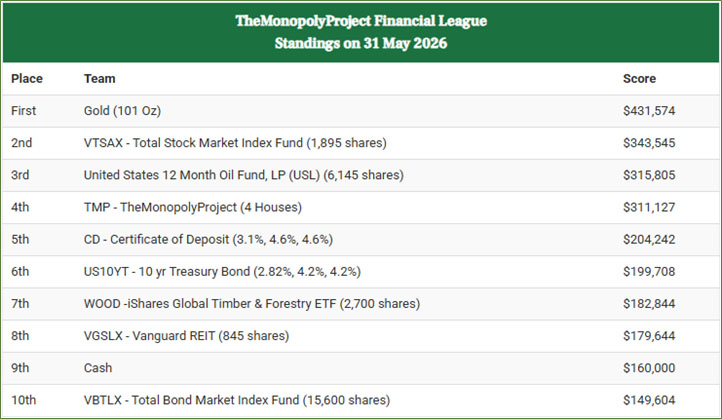
TMP has slipped to fourth place in our monthly asset showdown. Gold remains firmly in first, stocks rallied into second, and oil holds third — all likely boosted by the ongoing Iran situation and Strait of Hormuz tensions. We’re seeing a gradual decline across most assets right now, but history suggests this should reverse once the geopolitical dust settles.
Gold versus Silver
We bought a 10 oz silver bar as a wedding gift.
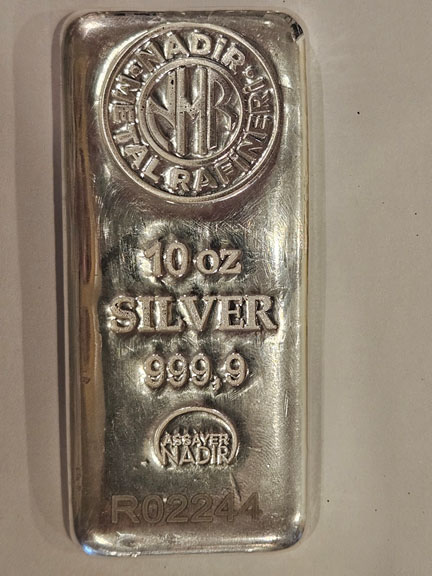
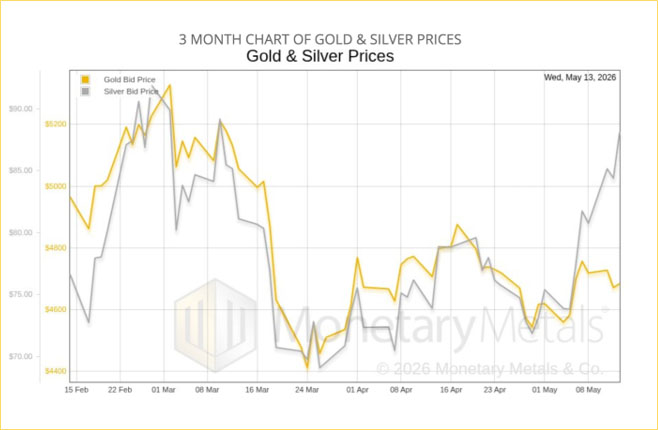
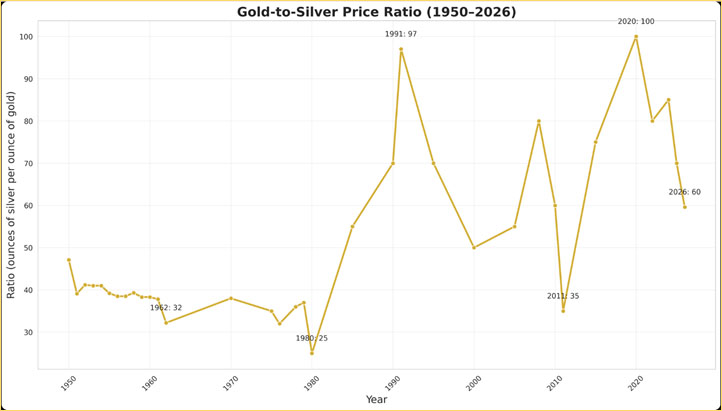
Silver was flirting with $80/oz when we bought the bar — it’s now trading around $75–77/oz as of early June. What’s going on? Here’s a short term (three months) and long term (75 years) chart of gold versus silver price ratio:
Here’s What GROK Says
Dynamics of the Gold-to-Silver Price Ratio
For centuries the gold-to-silver price ratio stayed remarkably stable between 10:1 and 16:1 under bimetallism. Governments fixed official mint ratios (like the U.S. Coinage Act of 1792 at 15:1) because both metals circulated as legal tender.
That changed after the end of bimetallism (the U.S. “Crime of ’73” in 1873), the shift to a pure gold standard, and especially Nixon’s 1971 closure of the gold window. Silver lost its primary monetary status and became a predominantly industrial commodity — used heavily in electronics, solar panels, EVs, medical applications, and more. Gold, by contrast, kept its role as the ultimate global monetary hedge and central-bank reserve asset.
The result is today’s structural divergence: silver’s price is far more volatile and tied to economic growth and manufacturing cycles, while gold moves more steadily in response to inflation, geopolitics, and fiat-currency concerns. Since 1971 the ratio has typically swung between 40:1 and 100:1+. As of early June 2026, it sits around 60:1 (gold near $4,500–$4,520/oz and silver near $75–$76/oz).
In essence, the divergence isn’t random market noise — it’s the logical outcome of silver evolving from money to industrial metal in a fiat world, while gold preserved its monetary premium. This explains why silver can dramatically outperform or underperform gold at different phases of the precious-metals cycle.
What Else We’re Doing Besides Managing Real Estate
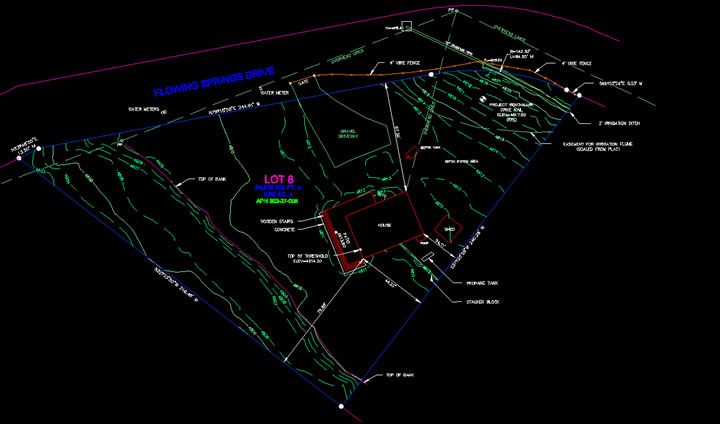
Life isn’t only spreadsheets and tenant calls. While we watch the scoreboard, we’re still deep into designing our new house. Here is the required plat elevation survey for the property:
The Bottom Line
Here we are in year seven of The Monopoly Project — a little behind on the scoreboard but richer in experience, memories, and a paid-off portfolio that will keep cash-flowing for decades. We’re not selling. We’re doubling down. If you’re on a similar long-term real-estate journey (or just tracking how different assets perform), drop a comment below — we’d love to hear how your portfolio is holding up this year.